
£466,000 to fix 26 Slough play areas, £373,621 to 15 community groups and £25,000 a ward: how the town's £1.5m Pride in Place grant is set to be spent.
Slough Borough Council has set out how it wants to spend £1.5m of government money on parks, play areas and community buildings. Almost a third of it would go on repairing children’s play equipment.
The plan went to a special Cabinet meeting at Observatory House on Monday evening. The council has published the full report and its appendices, which name every project and every play area, along with the amount attached to each.
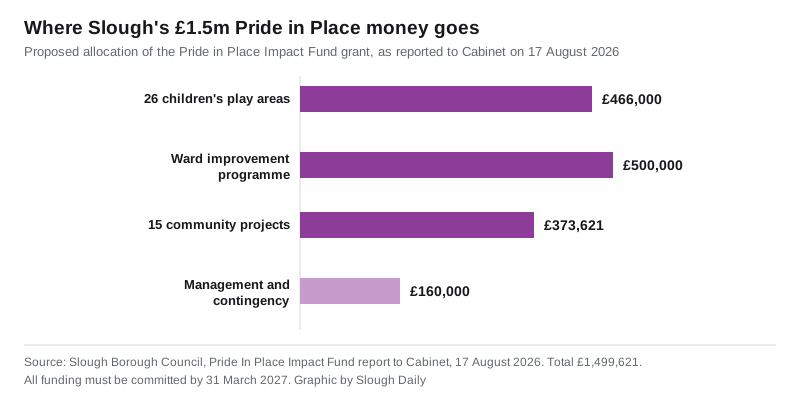
The report to Cabinet splits the £1.5m Pride in Place Impact Fund four ways:
- £466,000 on capital works to 26 children’s play areas across the borough
- £373,621 in grants to 15 externally delivered community projects
- £500,000 for a new Neighbourhood Pride in Place Improvement Programme, at roughly £25,000 a ward
- £160,000 held back for programme management and unforeseen costs
The council has not yet published the decision. Its decision record for the item still reads “To Follow”, and the minutes of Monday’s meeting are not out. The report itself was marked as a key decision and subject to call-in.
The money has a deadline attached
Slough was awarded the funding by the Ministry of Housing, Communities and Local Government in November 2025, as £0.750m in 2025/26 and £0.750m in 2026/27. Grant conditions let the council roll the first year forward without losing any of it.
They also set a hard stop. The full £1.5m has to be committed by 31 March 2027, and anything uncommitted goes back to the ministry. Officers want funding agreements with the outside groups signed by September 2026 to stay clear of that.
The fund is 100% capital, with no revenue attached. It can only pay for a physical asset or a lasting improvement, and spending has to clear the council’s £10,000 capitalisation threshold. Routine maintenance does not qualify.
Slough is one of 95 places picked for the Impact Fund, each given £1.5m, from a national pot of up to £150m running to March 2027. The government prospectus sets the terms.
Community groups bid for four times the money available
The council advertised an open call for projects with £450,000 to give away. It sent out 47 application packs and got 27 back, asking for £1.85m between them.
An officer panel judged 17 eligible. After a further review, 15 are recommended for a total of £373,621. Split by theme, that is £255,121 on community space, £110,500 on the town centre and £8,000 on public open space.
The recommended awards, as listed in Appendix A:
| Group | Project | Award |
|---|---|---|
| Cippenham Royal British Legion Club | Roof, car park, accessible doors and toilets | £70,000 |
| Slough in Bloom | Three-year public realm programme across 10 sites | £50,000 |
| Slough Town FC | Community sports hub at Tamblyn Fields, Upton | £40,000 |
| Jamia Masjid and Islamic Centre Slough | Replacing external doors across the mosque | £25,000 |
| Slough District Scouts / 2nd Cippenham Scout Group | Perimeter fencing and guttering | £25,000 |
| Slough CVS / WAM Get Involved | Hub Hall and Advice Centre improvements | £25,000 |
| Pakistan Welfare Association | Accessible community kitchen, Chalvey | £25,000 |
| Cippenham Baptist Church | Refurbished kitchen in the church hall | £24,000 |
| SWIPE Music | Jubilee Riverside Café at Herschel Park | £22,204 |
| Shiloh Pentecostal Church | Shiloh Community Hub, Baylis and Salt Hill | £20,000 |
| Slough Refugee Support | Refresh of premises indoors and out, Elliman | £17,782 |
| Visual Art Studio CIC | Studio improvements, Observatory Shopping Centre | £15,500 |
| Britwell 70 Project | “Place, Space, Trace”, marking 70 years of the estate | £8,000 |
| Keel Drive Allotment Association | Converting a store building into a community hub | £3,135 |
| Colnbrook and Poyle United Church | Replacing front and side doors with glazed ones | £3,000 |
Two of the awards are a fraction of much larger schemes. Slough Town FC’s £50,000 ask was for a £1.5m community sports hub, and the report notes the grant would be roughly 5% of the cost of delivering the site. The panel recommended £40,000. Together the 15 projects bring £1,739,698 of match funding alongside the council’s £373,621.
Which play areas are on the list
Officers compiled the play area list through routine asset monitoring. It runs to 26 sites, and the report describes several as unsafe or beyond repair rather than simply tired.
The largest allocations:
- Bridport Way, £90,000. Entire play area in very poor condition, several items already removed, holes left in hard surfaces where old landscaping rotted. Officers suggest replacing the whole thing.
- Spackmans Way Junior, £80,000. Whole area in very poor condition, complete removal and replacement recommended.
- Wood Lane, £40,000. Several items damaged beyond repair.
- Scaffel Road, £35,000. The multi-use games area is severely vandalised, with all the fencing to be replaced.
- Cardigan Close and Harvey Park, £20,000 each. Missing and deteriorating equipment, plus surfacing repairs.
Richards Way is a different case. The report says the whole play area is currently fenced off as unsafe, that the site is underused, and that the council should consider removing it and returning the land to grass. That is costed at £10,000.
The smallest item on the list is £1,500 at Buttermere Avenue, where most equipment is being replaced under separate works and the money would repaint fencing and secure the gates.
Salt Hill Park and Upton Court Park both need more work than the fund can carry. Their play areas are left out, and the report says other funding sources will be explored.
Every other ward gets about £25,000, with two exceptions
The remaining £500,000 sets up a Neighbourhood Pride in Place Improvement Programme. Rather than run another competition, the council proposes an equal split of roughly £25,000 per eligible ward, with ward councillors asked to agree a single priority project for their area.
Britwell and Foxborough are excluded. Those two areas are already in line for the far larger Pride in Place programme worth up to £20m each over ten years. The report says leaving them out avoids duplicating funding and spreads the rest more evenly.
Schemes have to be capital, visible and quick. The checklist officers will apply rules out anything that:
- needs planning permission or listed building consent
- needs land to be bought
- depends on complex third-party legal agreements
- cannot be fully installed within six months of a start order
- creates ongoing maintenance costs
Public realm work, pocket parks, greening, outdoor sports facilities, public art, wayfinding, street furniture, lighting and shopfront improvements are all named as eligible.
Awards would be decided by the Executive Director of Regeneration, Environment and Planning, in consultation with ward members and the Leader, under a delegation sought in the report.
What it means for you
If your local play area is in poor shape, check whether it is on the list of 26. Repairs there are funded and costed, and the work has to be committed by March 2027. If it is not on the list, the ward programme is the route, and that is decided by your ward councillors rather than by an application form.
There is no public application window for the £500,000 ward pot. The report says councillors will be briefed, given ward data packs, and asked to submit expressions of interest on a standard form by a set deadline. So residents who want something done in their street will need to make the case to their ward councillors. Officers say the council’s own record of complaints and casework is one of the things that will count as evidence of need.
The community grants round is closed. It ran once, was oversubscribed four to one, and the 15 recommended groups are expected to sign agreements by September.
Nothing here is maintenance money. The grant cannot pay for upkeep, and the report is explicit that any running costs created by the new and improved facilities have to be met from existing council budgets.
Sources
- Slough Borough Council, Pride In Place Impact Fund, report and appendices to Cabinet, 17 August 2026
- Slough Borough Council, Cabinet agenda, Monday 17 August 2026
- Slough Borough Council, decision record: Pride In Place Impact Fund
- Ministry of Housing, Communities and Local Government, Pride in Place Impact Fund prospectus
Have your say