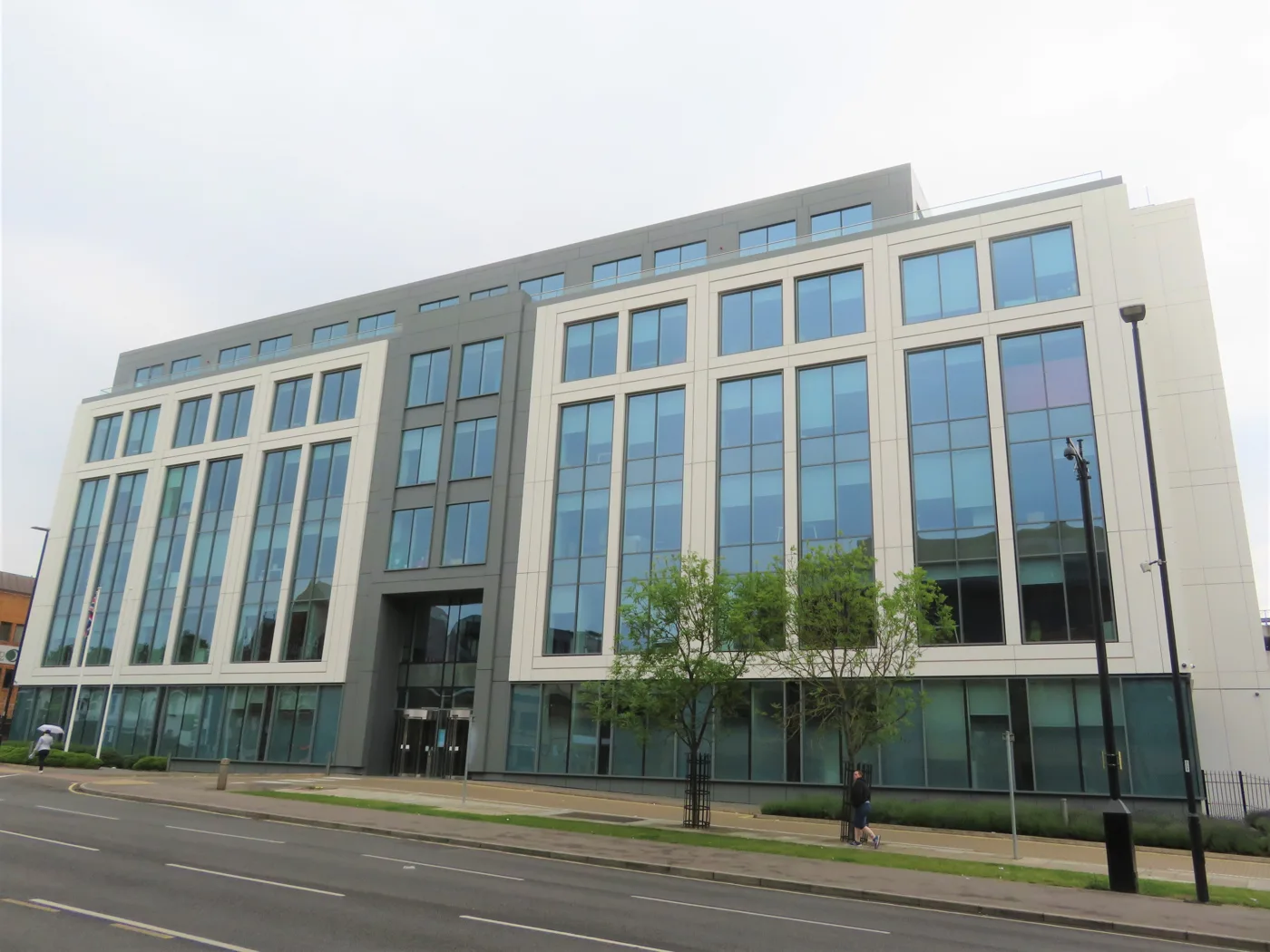
1,479 Slough households were in temporary accommodation on 31 December 2025, with 2,087 children. The council's five-year plan is open until 31 October.
Slough Borough Council has opened a consultation on a five-year plan to cut homelessness, and the numbers behind it are stark. On 31 December 2025, 1,479 Slough households were living in temporary accommodation, including 2,087 children. (MHCLG, Statutory Homelessness Detailed Local Authority Data, October to December 2025)
That is a rate of 27.30 households per thousand in the borough, against an England average of 5.49. Slough has the seventh highest rate of every English council in that table. The six above it, Newham, Westminster, Hackney, Lambeth, Southwark and Wandsworth, are all London boroughs, so Slough has the highest rate of temporary accommodation of any council outside London.
The draft Homelessness and Rough Sleeping Strategy 2026-2031 is out for comment until 31 October.
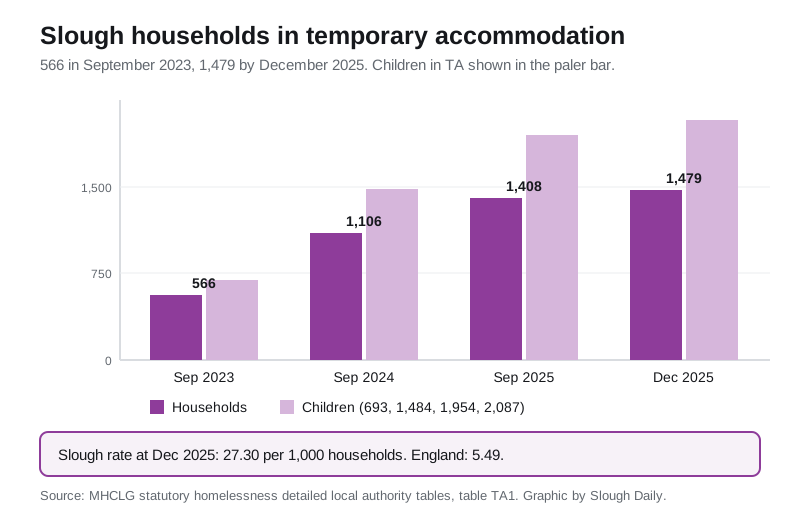
The rise took just over two years
The council’s own strategy puts it plainly: 566 households in September 2023, rising to 1,408 in September 2025. The government’s quarterly returns carry the same figures and one more recent quarter.
| Date | Households in TA | Children in TA | Rate per 1,000 households |
|---|---|---|---|
| 30 September 2023 | 566 | 693 | 10.15 |
| 30 September 2024 | 1,106 | 1,484 | 19.73 |
| 30 September 2025 | 1,408 | 1,954 | 25.00 |
| 31 December 2025 | 1,479 | 2,087 | 27.30 |
Source: MHCLG statutory homelessness detailed local authority tables, table TA1, for each quarter.
Two points of detail matter. The government rate is per thousand households in the borough, not per thousand residents; the council’s draft describes its figure as “per 1,000 population”, which is not what the source measures. And the most recent release, covering January to March 2026, records Slough’s entries as missing data, so the December figure is the latest confirmed count.
Nearly three in four are in nightly-let rooms
The composition of that 1,479 is the part the council calls unsustainable. At 31 December 2025:
- 1,073 households were in nightly paid, privately managed self-contained accommodation, 796 of them with children
- 138 were in private sector accommodation leased by the council or a registered provider
- 122 were in bed and breakfast hotels or shared annexes
- 102 were in other or unrecorded accommodation
- 42 were in council or housing association stock
- 2 were in a hostel or refuge
Nightly lets are the most expensive option a council has and the least secure for a family. They accounted for 72.5% of Slough’s temporary accommodation, against 37.6% across England. In September 2023 the figure was 185 households. It has since risen almost sixfold.
A further 177 Slough households were placed in another local authority’s district, away from schools, work and family.
Bed and breakfast, and the six-week rule
Under the Homelessness (Suitability of Accommodation) (England) Order 2003, bed and breakfast accommodation is not suitable for a household with children. Article 4 lifts that only where nothing else is available and the stay does not exceed six weeks, so six weeks is the effective limit. Slough’s own record on that has improved sharply:
- 30 September 2023: 15 households with children in B&B, 12 of them beyond six weeks
- 30 September 2024: 31 with children, 29 beyond six weeks
- 30 September 2025: 9 with children, all 9 beyond six weeks
- 31 December 2025: 4 with children, 3 beyond six weeks
The draft strategy sets the target at zero, listed as action 4.2: “Eliminate families in B&B over six weeks.”
What the council says it will do
The draft is built around the government’s five pillars and turns each into a Slough priority. The temporary accommodation commitments are the most concrete:
- deliver a temporary accommodation reduction plan
- eliminate families in bed and breakfast beyond six weeks
- set up a single private rented sector access and landlord offer
- introduce a rent guarantee or incentive model for landlords
- increase move-on from temporary accommodation into housing association homes
- adopt an out-of-borough placement policy
- strengthen inspections and suitability reviews
- monitor temporary accommodation cost and subsidy loss monthly
The target on families is to bring households with children in temporary accommodation from around 1,050 down to 900 by 2028/29. The strategy notes the target “must be finalised”.
Councillor Iftakhar Ahmed, lead member for housing, homelessness and communities, said Slough has “high demand for housing services, and issues of low affordability, high overcrowding, deprivation and health inequalities”. He said the aim is that where homelessness cannot be prevented, “it is brief, safe and well-managed”.
The prevention numbers are the weakest part
The strategy is candid about how the current service performs. For 2024/25 it records:
- 23% of prevention duties ended with accommodation secured for six months or more
- nearly half of prevention cases ended with the household becoming homeless anyway
- 64% of relief duties ran past the 56-day statutory period
- 90% of those cases were then accepted as owed the main homelessness duty
- 18.65 households per 1,000 were owed a homelessness duty, above the national average
Behind that sits the local rental market. Research carried out for the strategy on 13 February 2026 found Local Housing Allowance rates covered fewer than 3% of advertised properties in the borough. Slough’s average house price was £352,024 in June 2026, and you can see how that has moved by property type.
What it means for you
If you want to comment, the survey is open until 31 October at smartsurvey.co.uk/s/SloughHomelessness2026. The council asks residents, professionals and people with direct experience of homelessness what has and has not worked. The draft strategy and the survey link are both on the council’s housing page.
If you are homeless or at risk of it, do not wait for the strategy. The council has a duty to help if you are threatened with homelessness within 56 days, and acting early is the whole point of the plan. Start at the council’s homelessness pages.
If you are already in temporary accommodation, the draft commits the council to stronger inspections and suitability reviews. You have a right to ask for a review of whether your accommodation is suitable. If your household includes children and you have been in a bed and breakfast for more than six weeks, that placement is outside the law, and the council’s own target is to end it.
If you are a private landlord in Slough, the council intends to build a single landlord offer and a rent guarantee or incentive scheme. Both are listed as year-one actions, so the terms are not set yet and the consultation is the point at which to shape them.
Delivery will be overseen by the Director of Housing Needs and Support as senior responsible officer, with a new Homelessness and Rough Sleeping Taskforce bringing in registered providers, private landlords, health services, probation, the DWP and charities including Slough Homeless Our Concern. The council has promised quarterly performance reporting and an annual public progress report.
Sources
- Consultation on new homelessness and rough sleeping strategy, Slough Borough Council, 4 September 2026
- Draft Homelessness and Rough Sleeping Strategy 2026-2031 (PDF), Slough Borough Council
- Statutory homelessness in England: October to December 2025, MHCLG, detailed local authority table TA1
- Statutory homelessness in England: July to September 2025, MHCLG
- Statutory homelessness in England: July to September 2024, MHCLG
- Statutory homelessness in England: July to September 2023, MHCLG
Have your say
We read every message. To comment on this story, email the newsdesk and we may publish a selection of responses: hello@sloughdaily.co.uk.